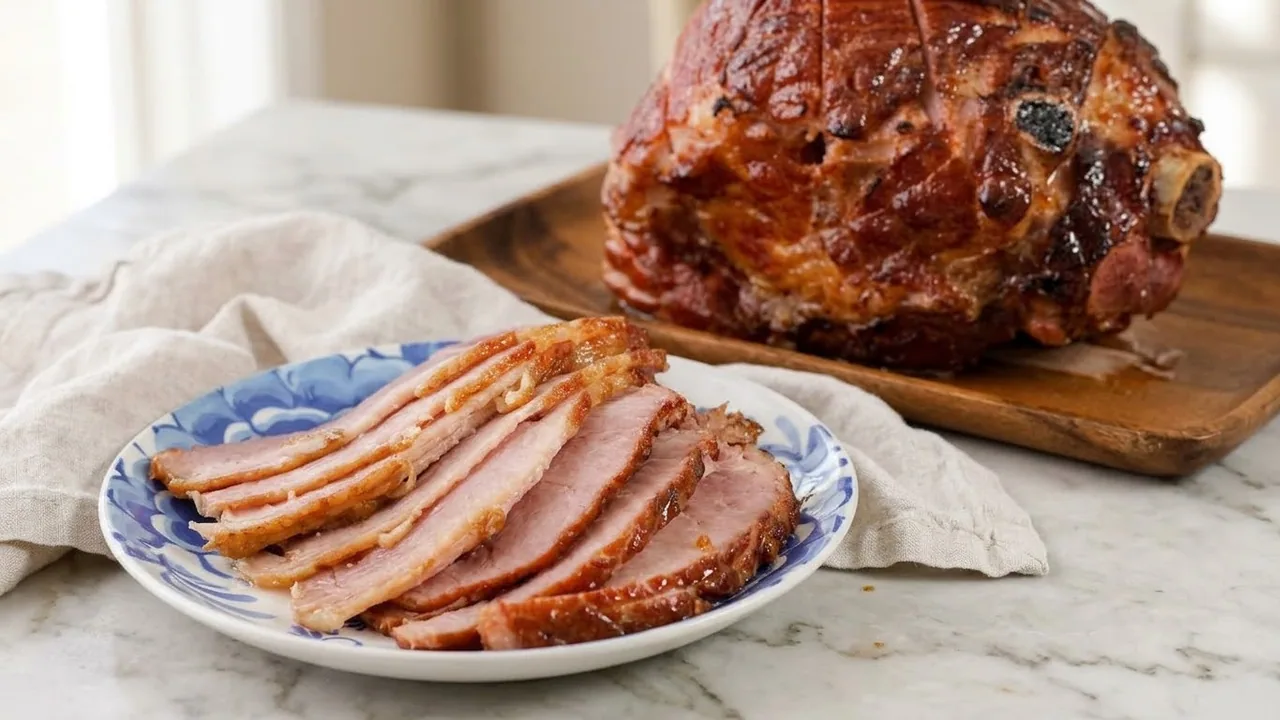
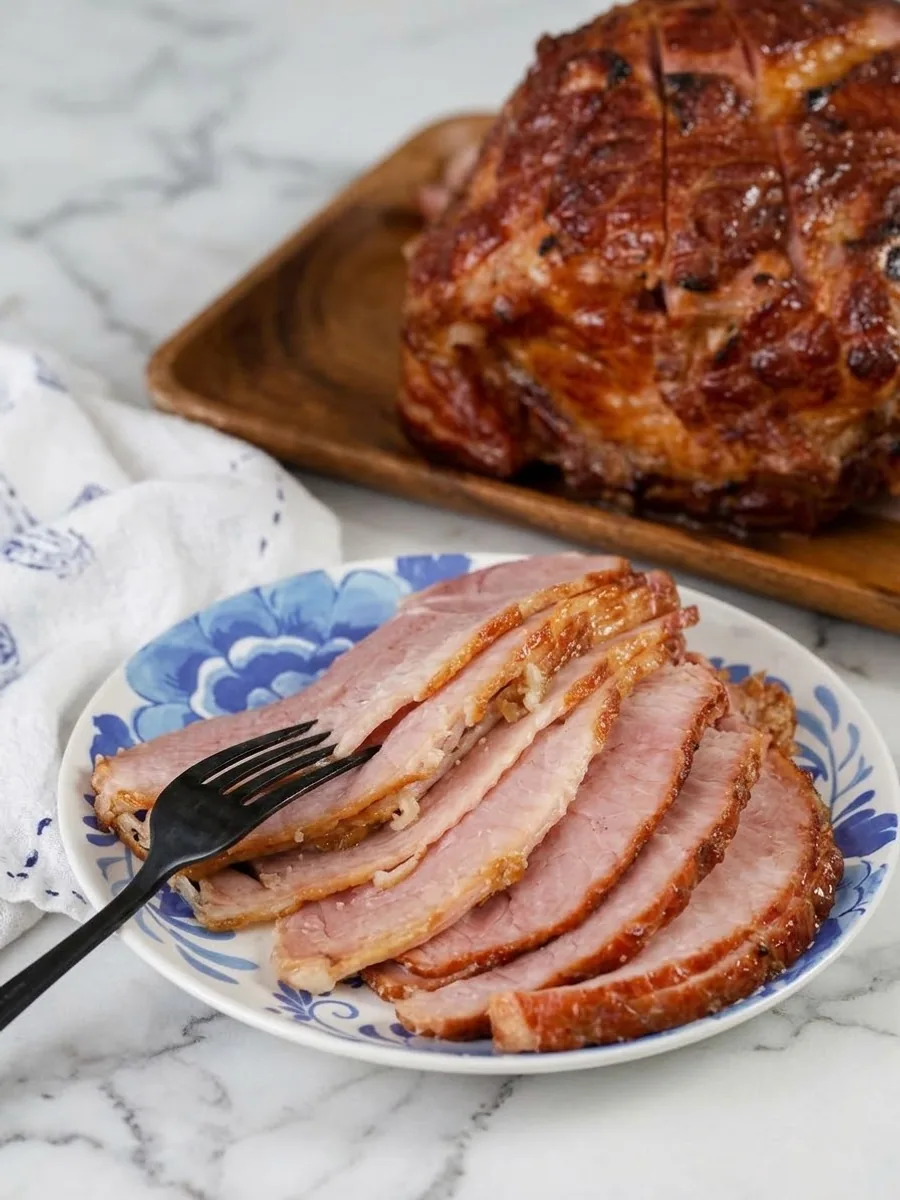
Spiral Ham: A pre-sliced, fully cooked ham (7–9 pounds) is your centerpiece—it needs only gentle reheating to retain its natural juices and tenderness. If your grocery store doesn’t have spiral ham in that weight range, a bone-in ham works equally well; just check the package for per-pound roasting guidance to adjust your total cooking time.
Dijon Mustard: This tangy, sharp condiment acts as a flavor anchor, cutting through the ham’s richness and preventing the glaze from tasting one-note sweet. It also contains a subtle sharpness that develops more complex notes when exposed to the 425°F finish. If you have whole-grain mustard on hand, it delivers a similar effect with added texture.
Pineapple Juice or Orange Juice: Both juices bring natural acidity and brightness that balance the sweetness of the brown sugar glaze while adding subtle fruity notes. Pineapple juice has a slightly deeper tropical character; orange juice reads more citrus-forward. Either one prevents the glaze from cloying and adds moisture to the ham’s exterior.
Brown Sugar: This ingredient caramelizes at high heat to create that mahogany, sticky-sweet crust we’re after. Its molasses content gives deeper, richer flavor than white sugar would—especially once it hits 425°F in the final stage.
Ground Ginger: A quarter-teaspoon is all you need to add subtle warmth and spice complexity that ties the sweet and savory elements together without overpowering the dish. It’s the secret ingredient that makes the glaze taste sophisticated rather than simply sugary.
Cornstarch: This thickener helps the glaze cling to the ham’s surface and caramelize evenly, preventing it from running off into the roasting pan. It also gives the finished crust a glossy, lacquered appearance rather than a thin, watery finish.
Essential Kitchen Tools You Will Need
Large Roasting Pan: Use one that’s at least 9 by 13 inches to accommodate a 7–9 pound ham and allow air circulation around it; too-small a pan traps steam and prevents even cooking.
Instant-Read Meat Thermometer: Essential for confirming the ham reaches a safe temperature; spiral hams are precooked, but verifying doneness prevents overcooking and drying.
Small Saucepan: Mix and simmer your glaze ingredients here before brushing; the small size gives you precise control over heat and prevents scorching.
Aluminum Foil: Covers the ham during the gentle 325°F roast to lock in moisture and prevent surface drying before the final glaze phase.
Pastry Brush: A silicone or natural-bristle brush applies both the initial mustard mixture and the finished glaze evenly across the ham’s scored surface.
Step-by-Step Instructions
Before you start, position your oven rack in the lower third of the oven to ensure even heat circulation around the ham, and have your roasting pan ready on the counter. If you’re using a disposable aluminum pan, that works perfectly; if using a standard roasting pan, no special prep is needed.
1. Preheat the Oven:
Set your oven to 325°F and allow it to preheat fully—this ensures consistent, gentle cooking that keeps the ham juicy throughout the roast. This takes about 10–15 minutes while you prepare the ham.
2. Remove the Plastic Disk:
Locate the plastic disk on the ham’s bone end and discard it—this small piece prevents the bone from cooking properly and needs to come off. Take a moment to inspect the ham’s surface for any other packaging remnants before proceeding.
3. Prepare the Initial Brush:
In a small bowl, combine 2 tablespoons Dijon mustard with ¼ cup pineapple juice (or orange juice if you prefer), stirring until the mustard dissolves into the juice. This mixture provides the first layer of flavor and helps retain surface moisture during the long roast.
4. Position and Brush the Ham:
Place the ham flat side down in your roasting pan, then brush the entire surface generously with the mustard-juice mixture, using all of it. The flat side down position ensures even heat contact with the pan.
5. Cover and Roast:
Drape the pan tightly with aluminum foil, sealing the edges so steam stays trapped inside the pan. Roast for 12–15 minutes per pound according to your ham’s weight—a 7-pound ham will take roughly 84–105 minutes, while a 9-pound ham needs about 108–135 minutes (or follow package directions if they differ).
6. Make the Glaze:
While the ham roasts, combine ½ cup pineapple juice, ½ cup brown sugar, 2 tablespoons Dijon mustard, ¼ teaspoon ground ginger, and 2 teaspoons cornstarch in a saucepan. Bring to a boil over medium-high heat, stirring occasionally to dissolve the sugar and prevent lumps. Turn the heat down and simmer for 2–3 minutes until slightly thickened, then transfer to a bowl and let it cool to room temperature—this prevents the glaze from cooking off when brushed onto the warm ham.
7. Increase Oven Temperature:
When 15 minutes remain on your roasting time, carefully remove the ham from the oven and increase the temperature to 425°F. Leave the foil on for now; you’ll uncover it in the next step.
8. Brush with Glaze:
Remove the foil and brush the cooled glaze evenly over the ham’s entire surface, working quickly so the ham doesn’t cool too much. Use all the glaze for maximum caramelization.
9. Caramelize and Finish:
Return the ham to the oven, uncovered, and roast until the glaze turns a deep mahogany brown and the ham reaches an internal temperature of 140°F when measured with a meat thermometer in the thickest part (not touching bone). This finish typically takes 10–15 minutes; watch closely during the last few minutes to prevent the sugar from burning.
10. Rest Before Serving:
Remove the ham from the oven and let it rest for 10 minutes before carving. This allows the juices to redistribute throughout the meat, ensuring every slice stays tender and moist.
Chef Pro Tips for Foolproof Holiday Results
After testing this recipe dozens of times in my home kitchen, I’ve learned that a few strategic moves separate a mediocre ham from one that earns genuine compliments.
Foil coverage is non-negotiable for moisture. The initial 12–15 minutes per pound under tight foil creates a steamy environment that keeps the meat from drying out during the long roast. I cannot overstate this—I’ve seen beautiful hams turn tough when cooks skipped this step. Remove the foil only during the final 15-minute glaze phase.
Use an instant-read thermometer, not guesswork. Spiral hams are pre-cooked, so you’re really reheating to safe temperature. Aim for 140°F internal temperature at the thickest part (not touching bone). This takes the guesswork out of timing and prevents overcooking.
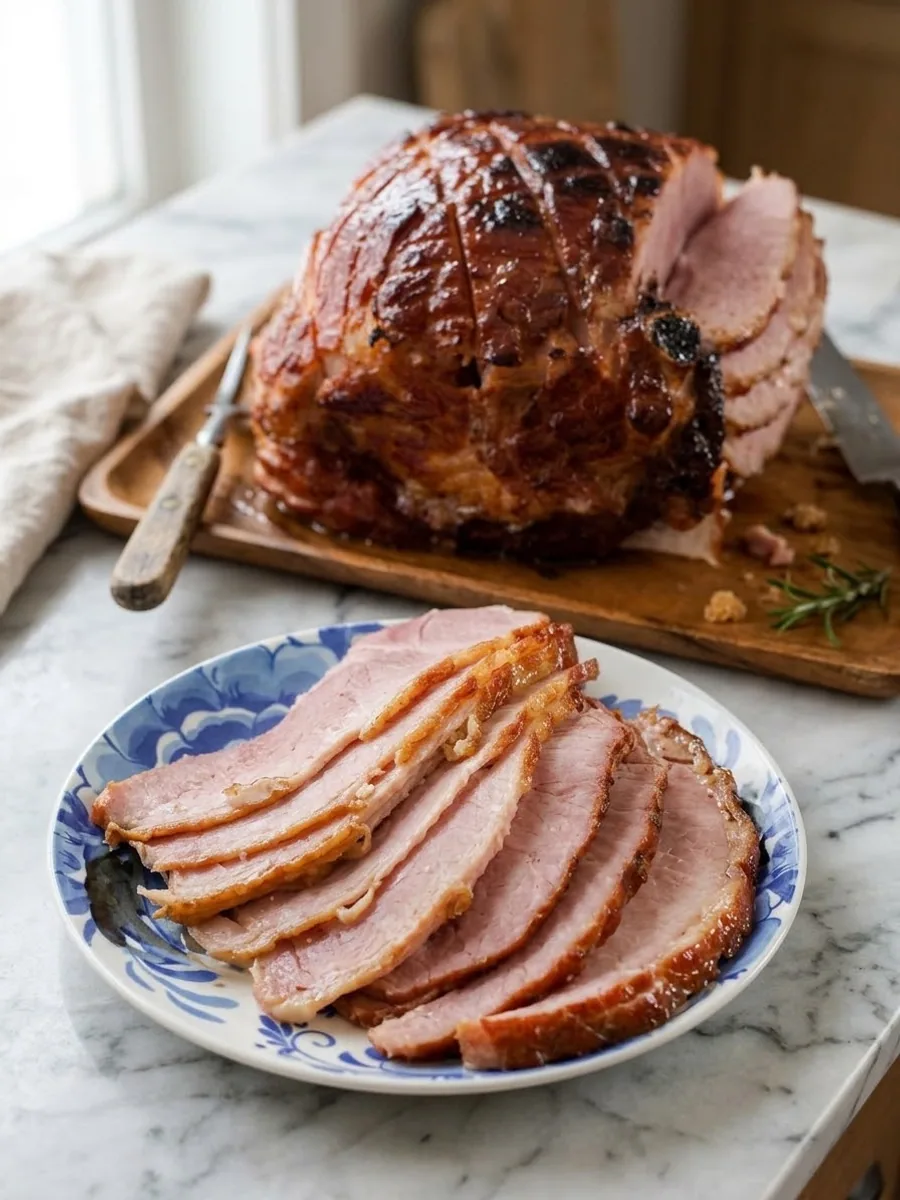
Watch the glaze, don’t walk away. When you turn the oven up to 425°F and brush on that glaze, the sugar will caramelize rapidly—which is exactly what you want. Set a timer for 5 minutes and check on it. If it’s browning unevenly, rotate the pan. The goal is a mahogany, sticky crust, not charred black spots.
Scale the glaze proportionally for a crowd. The glaze recipe makes enough for one 7–9 pound ham. If you’re cooking two hams side by side, double the glaze ingredients and divide it between both. This ensures each ham gets adequate coverage and caramelization.
Let the ham rest 10 minutes after cooking. This isn’t just tradition—it redistributes moisture throughout the meat so each slice stays juicy and tender.
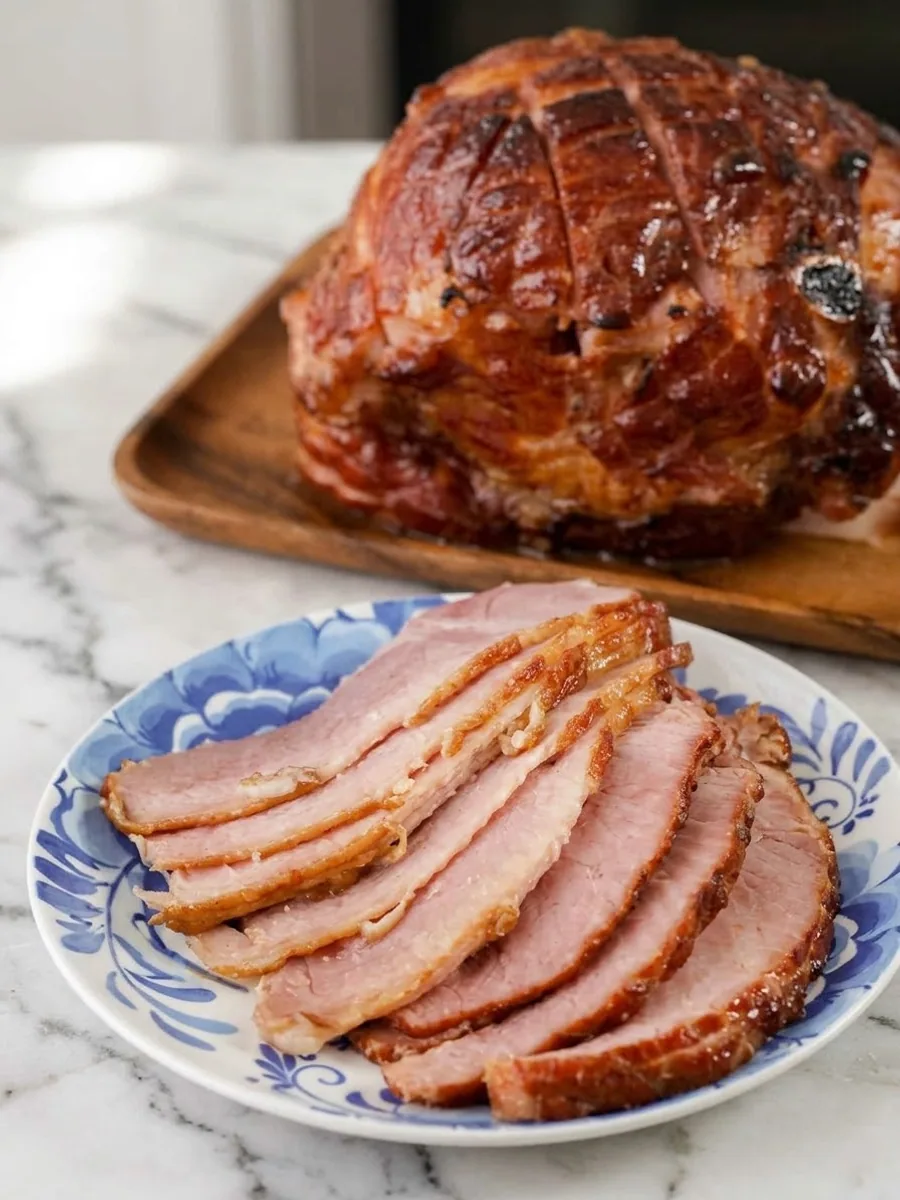
Common Mistakes to Avoid
Skipping the initial Dijon-juice brush. Some cooks jump straight to the final glaze, but that first coating during roasting helps build flavor layers and sets the stage for even caramelization later. Apply it right after the ham goes in.
Turning up the oven too early. Increase heat to 425°F only at the 15-minute mark. If you do it sooner, the exposed meat will dry before the glaze caramelizes.
Letting the glaze burn instead of caramelize. A caramelized glaze is shiny and sticky. If it turns black or smells acrid, the oven was too hot or the ham sat in there too long. Watch closely during those final minutes and trust your senses.
Skipping the plastic disk removal. That little disk on the bone must go before roasting—it doesn’t soften or dissolve, and it’ll stay lodged in the meat if left behind.
Make-Ahead, Overnight Prep & How to Store Without Drying Out
Make-Ahead & Overnight Prep Timeline
The beauty of this ham is how much prep work you can front-load. Up to 2 days before Christmas, make the brown sugar glaze: combine the pineapple juice, brown sugar, Dijon mustard, ground ginger, and cornstarch in a saucepan, bring it to a boil, then simmer for 2–3 minutes. Let it cool completely and store it in an airtight container in the refrigerator. This eliminates a step on the day itself and gives you one less thing to monitor while the ham roasts.
On the morning of your feast, remove the spiral ham from the refrigerator 1–2 hours before cooking so it comes closer to room temperature—this helps it cook more evenly. Prep your roasting pan, mix the initial Dijon mustard and pineapple juice brush, and you’re ready to slide the ham into the oven. This timing strategy means your actual hands-on work is confined to those final 15 minutes when you turn up the heat and apply the glaze.
Storing Leftovers, Freezing & Gentle Reheating
Leftover ham keeps refrigerated in an airtight container for up to 5 days. When you’re ready to reheat, wrap the ham tightly in foil and warm it at 325°F for about 10 minutes per pound, adding a splash of pineapple juice before sealing the foil. This gentle method restores moisture and prevents the meat from drying out during reheating.
If you want to freeze leftovers, they’ll keep for 1–2 months in a freezer-safe container. Thaw overnight in the refrigerator before reheating using the same foil-and-juice method.
What to Serve With It
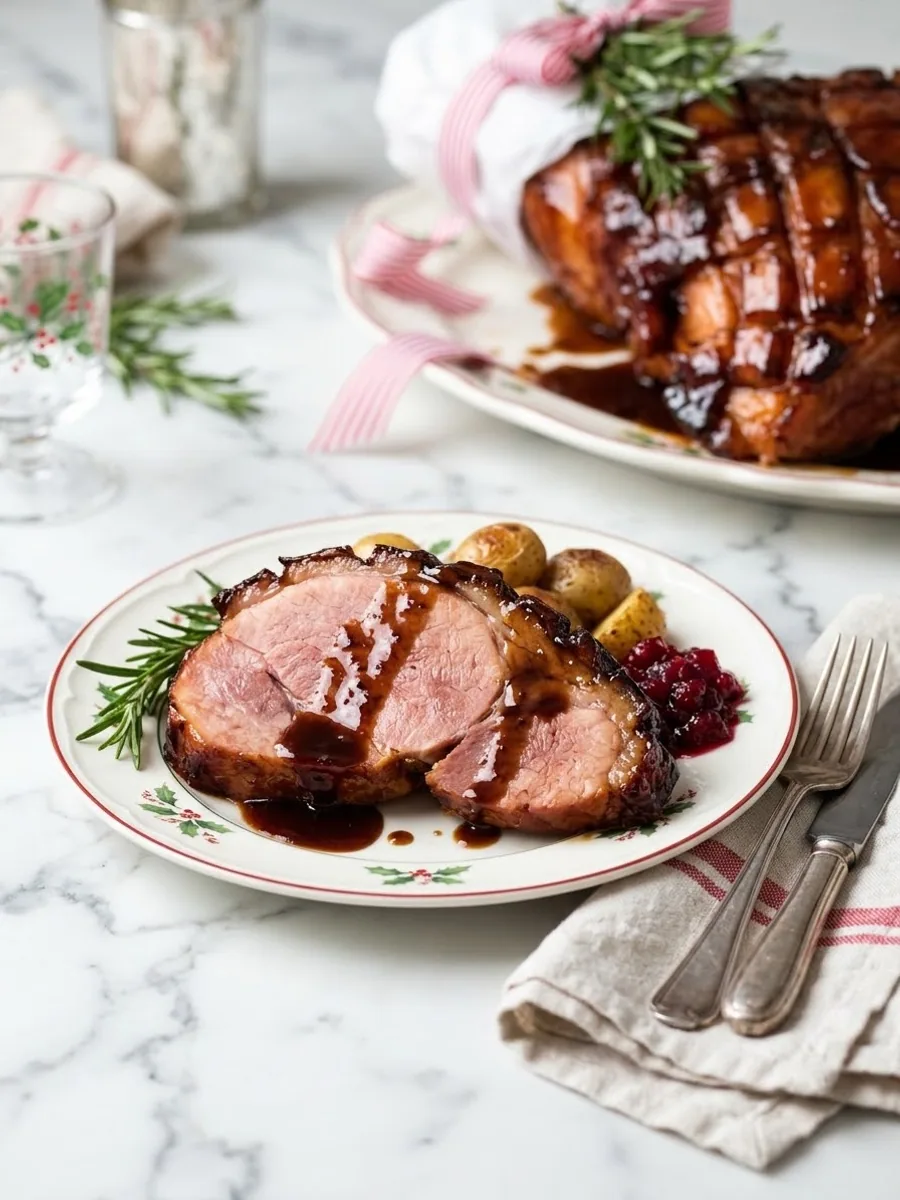
A glazed ham this beautiful deserves companions that enhance rather than compete with its sweet-savory profile. I’ve learned through countless holiday dinners that the best spreads balance richness with brightness—a few standout sides that let your centerpiece shine while creating a memorable feast.
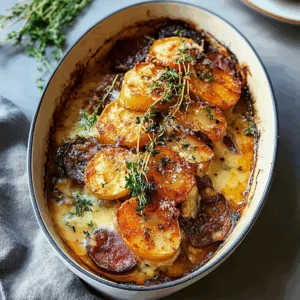
The classic pairing route works because it’s been tested by generations: start with something starchy and comforting to anchor the meal. 12 Creamy Scalloped Potatoes & Holiday Dinner Sides provides that creamy, buttery foundation that complements the ham’s caramelized glaze without overwhelming it. If you’re looking for a lighter grain component, Classic Apple Sage Holiday Stuffing adds herbaceous complexity that plays beautifully against the pineapple juice and ginger notes in your glaze.
For the vegetable course, I always include something with natural sweetness to echo the brown sugar crust. Sweet Potato Casserole with Almond Streusel is my go-to because the warm spices and almond topping create textural contrast and won’t feel redundant alongside your glazed ham.
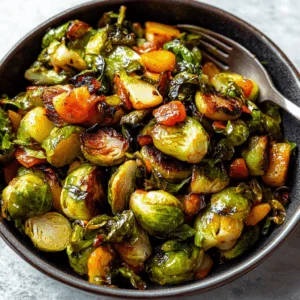
Here’s my four-part holiday ham plate: the ham (your showstopper, naturally), roasted root vegetables—carrots, parsnips, or Brussels sprouts tossed with olive oil and sea salt to add earthiness and char—a sharp condiment like tangy cranberry sauce or spiced apple chutney to cut through the richness, and a creamy side whether that’s scalloped potatoes or a simple buttered roll.
The tartness in cranberry sauce especially highlights the Dijon mustard’s savory edge while the acidity cleanses the palate between bites. This balance—sweet ham, creamy starches, tart fruit, roasted vegetables—is what transforms a lovely main into a truly memorable holiday table.
Frequently Asked Questions
How long does it take to cook a 7–9 pound ham?
Plan for approximately 2.5 hours total (including prep): about 12–15 minutes per pound for the covered roast at 325°F, plus 15 minutes at 425°F for the final glaze and caramelization. For a 7–9 pound ham, expect roughly 2 to 2.5 hours of active oven time.
Can I prepare the glaze ahead of time?
Yes. Mix the glaze ingredients (pineapple juice, brown sugar, Dijon mustard, ground ginger, and cornstarch), simmer for 2–3 minutes to thicken, then cool and store in an airtight container in the refrigerator for up to 2 days. Simply brush it on during the final 15 minutes of cooking.
What temperature should the ham reach for food safety?
The ham should reach an internal temperature of 140°F for a pre-cooked spiral ham (most store-bought hams are pre-cooked). Use a meat thermometer inserted into the thickest part of the meat, avoiding bone, to verify doneness.
How do I store leftover ham?
Wrap cooled ham tightly in foil or place it in an airtight container and refrigerate for up to 5 days. Slice it as needed and reheat wrapped in foil at 325°F with a splash of pineapple juice to restore moisture.
What if my glaze burns before the ham finishes cooking?
The two-stage method prevents this by keeping the oven at a gentle 325°F during the long roast; the glaze only goes on in the final 15 minutes at 425°F. If you notice excessive browning, loosely tent the ham with foil and reduce oven temperature by 25°F.
Best Brown Sugar Glazed Christmas Ham (Juicy & Easy)
This glazed ham features a caramelized brown sugar crust with subtle ginger warmth and bright citrus notes, delivering fork-tender, juicy meat that’s the showstopping centerpiece of any holiday table.
- Prep Time: 20 minutes
- Cook Time: 1 hour 45 minutes
- Total Time: 2 hours 5 minutes
- Yield: 8 servings 1x
- Category: Main Dish
- Method: Baking
- Cuisine: American
Ingredients
- 1 spiral ham, approximately 7-9 pounds
- 2 tablespoons Dijon mustard
- ¼ cup pineapple juice or orange juice
Brown Sugar Glaze
- ½ cup pineapple juice or orange juice
- ½ cup brown sugar
- 2 tablespoons Dijon mustard
- ¼ teaspoon ground ginger
- 2 teaspoons cornstarch
Instructions
Prep & Season
- Preheat oven to 325°F and position a rack in the lower third of the oven.
- Remove and discard the plastic disk on the ham bone if present. Pat the ham dry with paper towels.
- In a small bowl, whisk together 2 tablespoons Dijon mustard and ¼ cup pineapple juice until smooth. Set the glaze brush nearby.
- Place the ham flat side down in a large roasting pan and brush the mustard-juice mixture evenly over the entire surface.
Roast & Prepare Glaze
- Cover the roasting pan tightly with aluminum foil, sealing all edges to trap steam and keep the ham moist.
- Roast the ham at 325°F for 12-15 minutes per pound (approximately 1 hour 24 minutes to 1 hour 45 minutes for a 7-9 pound ham), or according to your ham’s package directions.
- While the ham roasts, combine all Brown Sugar Glaze ingredients (½ cup pineapple juice, ½ cup brown sugar, 2 tablespoons Dijon mustard, ¼ teaspoon ground ginger, and 2 teaspoons cornstarch) in a small saucepan.
- Bring the glaze to a boil over medium-high heat, stirring constantly, then reduce heat to low and simmer for 2-3 minutes until thickened slightly. Transfer to a bowl to cool to room temperature.
Glaze, Caramelize & Rest
- About 15 minutes before the ham’s roasting time is complete, carefully remove it from the oven and increase the oven temperature to 425°F.
- Brush the cooled glaze evenly over the ham’s surface using a pastry brush, working it into any spiral cuts for deeper flavor and caramelization.
- Return the uncovered ham to the 425°F oven for 8-12 minutes, watching carefully until the glaze turns deep golden brown and caramelizes at the edges, and the ham reaches an internal temperature of 140°F at the thickest point (use an instant-read thermometer).
Notes
- Make-Ahead Prep: Prepare the Brown Sugar Glaze up to 24 hours ahead and refrigerate in an airtight container. Let it come to room temperature before brushing onto the ham during the final roasting phase.
- How to Store & Reheat Without Drying Out: Wrap cooled leftover ham tightly in foil and refrigerate for up to 5 days. Reheat slices in a 325°F oven covered with foil for 10-15 minutes, adding a splash of pineapple juice between the foil and ham to restore moisture.
- Chef Texture & Flavor Tip: Use an instant-read meat thermometer inserted into the thickest part of the ham (not touching bone) to ensure it reaches 140°F for food safety without overcooking. The high-heat glaze phase should create a glossy, caramelized crust while keeping the interior juicy.
- Freezing Instructions: Cool the cooked ham completely, slice if desired, then wrap individual portions tightly in plastic wrap followed by a layer of aluminum foil. Freeze for up to 3 months. Thaw overnight in the refrigerator before reheating.
Nutrition
- Serving Size: 1 serving
- Calories: 380
- Sugar: 14g
- Sodium: 520mg
- Fat: 16g
- Saturated Fat: 7g
- Unsaturated Fat: 8g
- Trans Fat: 0g
- Carbohydrates: 38g
- Fiber: 3g
- Protein: 18g
- Cholesterol: 65mg
Keywords: brown sugar glazed ham, Christmas ham recipe, holiday ham, juicy baked ham, Dijon mustard ham, easy ham glaze, festive ham